CBC’s The National last evening [20 Sep 2012] featured a segment entitled ‘Vancouver Housing: Bubble or Bust?’. We’ll be transcribing and headlining one or two sub-stories from that piece. Until then, readers may want to view the whole thing at the CBC site:

—
UPDATE 22 Sep 2012: Care of ‘AP’, we now have a transcription of the whole piece and append it here [Thanks A.P.! -ed]:
PETER MANSBRIDGE: Welcome back. We’re heading to Vancouver now, home of the highest real estate prices in the country. And that’s our focus this evening, assessing the market there, what’s happening to it and what it means for the rest of Canada.
Would you be willing to pay more than $2 million for a home or say 1.4 million? Those are the average prices in one of this city’s trendier places, the West Side and Kitsilano. And believe it or not, that’s something of a bargain. The recent trend for prices across the Vancouver region is down. That doesn’t mean you’ll soon be able to pick up a gorgeous home for the price of a garden shed, but after years of buyers being at the mercy of forces beyond their control, the forces are with them. Not only are the houses going for less, they’re sitting for sale longer. Even bidding wars are becoming a memory.
Some say it’s the beginning of a correction, while some say it’s beginning of a crash. Our Chris Brown takes a look at what’s hitting home in Vancouver.
CHRIS BROWN: On a nice, sunny day the premium you pay to live in Vancouver seems to be worth every penny. It’s got the beach, the views, the trendy hangout spots and homebuyers have been prepared to plunk down a fortune to own a piece of it. Year after year after year prices in this city shattered once unthinkable ceilings. Until now.
GARTH TURNER: I see risk more than anything. I see a market that’s gotten beyond itself. The prices bear no real relation to the economics economics behind the market, so it’s only a matter of time and depth of how much destruction there’s going to be.
CAMERON McNEILL: Whenever the market goes near the top part of the cycle we always do hear pessimistic economists talking about bubble, et cetera. But the reality is that the fundamentals that are driving the market below the surface are just too strong for any sort of bubble circumstance to happen.
CHRIS BROWN: Whether Vancouver’s market has finally reached the tipping point after years of incredible gains has become the debate in living rooms and boardrooms across the city. The numbers provide ammunition for both sides.
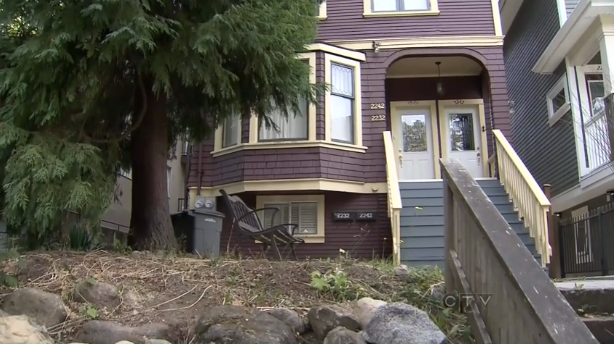
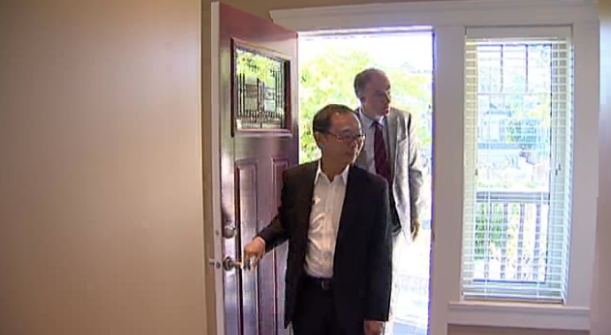
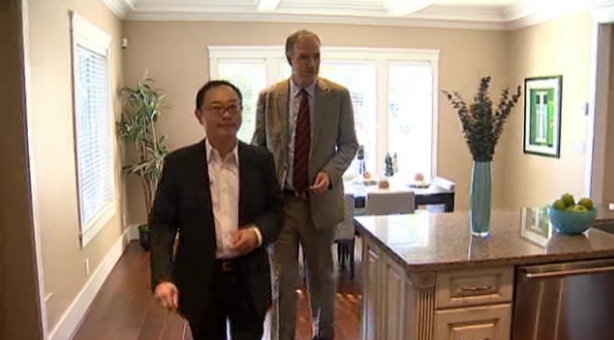
At first glance Philip Chan’s property in in popular Kitsilano would seem to support those who believe the crash is upon us. It’s a very nicely finished 1,700 square foot newly built unit in a triplex. Back in March it came on the market for $1.79 million, including sales tax. It’s now 1.57 million. That’s an almost 12 percent price drop.
PHILIP CHAN: I think the market actually during the last six months has adjusted downwards. I think everybody know about that. And it went up too fast and it’s just taking a little bit of an adjustment.
CHRIS BROWN: Describing a $200,000 price drop as an adjustment is just the kind of thing those who believe the market is unsustainable seize on. They argue it tries to sugar coat the ugly reality that prices are tanking. Chan, who built this home is a realtor who’s also trying to sell it, doesn’t believe that.
PHILIP CHAN: Unit like this, I think you can find no more than 10 on the market at this moment. How much can it drop?
CHRIS BROWN: A lot more, argues Garth Turner. From his perch in Toronto the former MP writes a blog on real estate and has a big following in this city.
GARTH TURNER: People in Vancouver have to spend on average up to 70, 80, 90 percent in order to afford the average home. That is out of whack with every place else pretty much in the world. Beyond this façade of high prices is a great big steaming pile of debt and there’s a limit to how much debt people can get into. I think actually we’re at that limit.
CHRIS BROWN: Condo marketing specialist Cameron O’Neill argues Turner’s affordability statistics are misleading. He says they’re skewed by high prices for detached homes in a city where there’s no more room to build any. Many more people, he says, choose to buy condos or townhomes.
CAMERON McNEILL: We are in a, in fact, like a mini Manhattan and people want to live in this dense population.
CHRIS BROWN: There’s been a culture shift in Vancouver, he says. Living in smaller spaces is seen as okay. For many people, including families, getting along with less space is expected, even desirable.
CAMERON McNEILL: In Yaletown, one of the boroughs within downtown Vancouver over my shoulder here, just 10 years ago you wouldn’t see a baby carriage. Today they have six or seven daycare with waiting list and they’re happy to have the coffee shop as their living room, they’re happy to have the park as their backyard and they’re happy to have the seawall as their playground.
CHRIS BROWN: It’s true that Vancouver’s average detached home price are staggering. Even with this dip average house prices in the city proper average over a million dollars and in the more expensive western part of the city they’re twice that much. But townhomes are cheaper and condos even more so. In other words, it’s only in certain parts of the city for certain types of housing the prices really went berserk. Those who believe the fundamentals here are sound argue are there are lots of housing options. But Garth Turner believes the gap between wages and prices remains too great.
GARTH TURNER: No market is sustainable when the average consumer can’t afford the product. In downtown Toronto, where you’ve got very expensive real estate, it’s at a multiple of about eight times what the average income is to buy the average home, which most people can’t afford. The U.S. collapsed at 4.6. Well, you know what? In Vancouver right now we’re 11.5.
CAMERON McNEILL: The fact of the matter is in Vancouver you can today buy a condominium, you can rent it out and you will have 40 people lining up to try to rent that condominium. They’ll be paying a very, very high and a fair rent. If you have that much desire for people to — to live in a condominium, you know, I think that the market’s got no problem sustaining itself.
CHRIS BROWN: At his Kitsilano property owner and realtor Philip Chan is sounding confident the market won’t slip much further from the 10 or 12 percent it already has.
PHILIP CHAN: Nobody can predict the future, so if you see that the market is healthy enough and you can afford to do it, do it. You can either sit by the ballpark and you watch the game or you can go down and play the game. You might get hurt or you might win.
GARTH TURNER: We see people, particularly in Vancouver, with 80, 90, 95, a hundred percent of their net worth in one asset at one address on one street in one neighbourhood. To me that defines risk.
CAMERON McNEILL: I always say Vancouver is the Swiss bank account of international real estate. It’s a — it’s a funny little quote that I say because sophisticated people, whether they live in Vancouver or they’re international, they — they recognize Vancouver as a safe, long-term place to park some money when it comes to real estate.
CHRIS BROWN: In the months to come that assertion will be tested. Are we looking at a bubble that’s bursting or a boom that’s just had a little hiccup?
(BROADCAST CONCLUDED)































 Vancouver Real Estate Anecdote Archive